Author, Kim Bloomberg
Updated August 2026
Based on hands-on testing across three art supply retailers, Golden and Liquitex are the best acrylic paint brands overall for coverage and consistency, Hobby Lobby's Master's Touch and Utrecht are the best value for students, and Apple Barrel or Plaid are the best choice for kids and beginners. Keep reading for exactly how each one performed and which is right for your project.
Lately when I head to the art supply store, I am overwhelmed by all of the choices. There are literally thousands of different paints and they all have different descriptions. I figured if I am overwhelmed, you must be, too.
I'm on a mission to find the best acrylic paint when it comes to high pigment load, good quality and vibrant colors. So...what is the best acrylic paint? Let's find out!
Before we dive in, I just want to make it clear that I didn't receive any compensation for this article. I was generally curious about which paints had the most vibrant colors and consistency, so I tested and tested. What follows are the results of those tests - I hope you find this process as fascinating as I did! 🤓
Affiliate disclaimer: While I stand by every product I recommend, I occasionally make a small commission from affiliate links.
This guide is for you if: you're choosing acrylic paint for the first time, you're outfitting a classroom or a kids' craft table, or you've been painting for a while and want to know whether the expensive tubes are actually worth it.
I've taught art for over 20 years, and I still learn something new every time I run a side-by-side test like this one. 😱
Acrylic Paint 101: Common Questions About Acrylic Paint
What is acrylic paint?
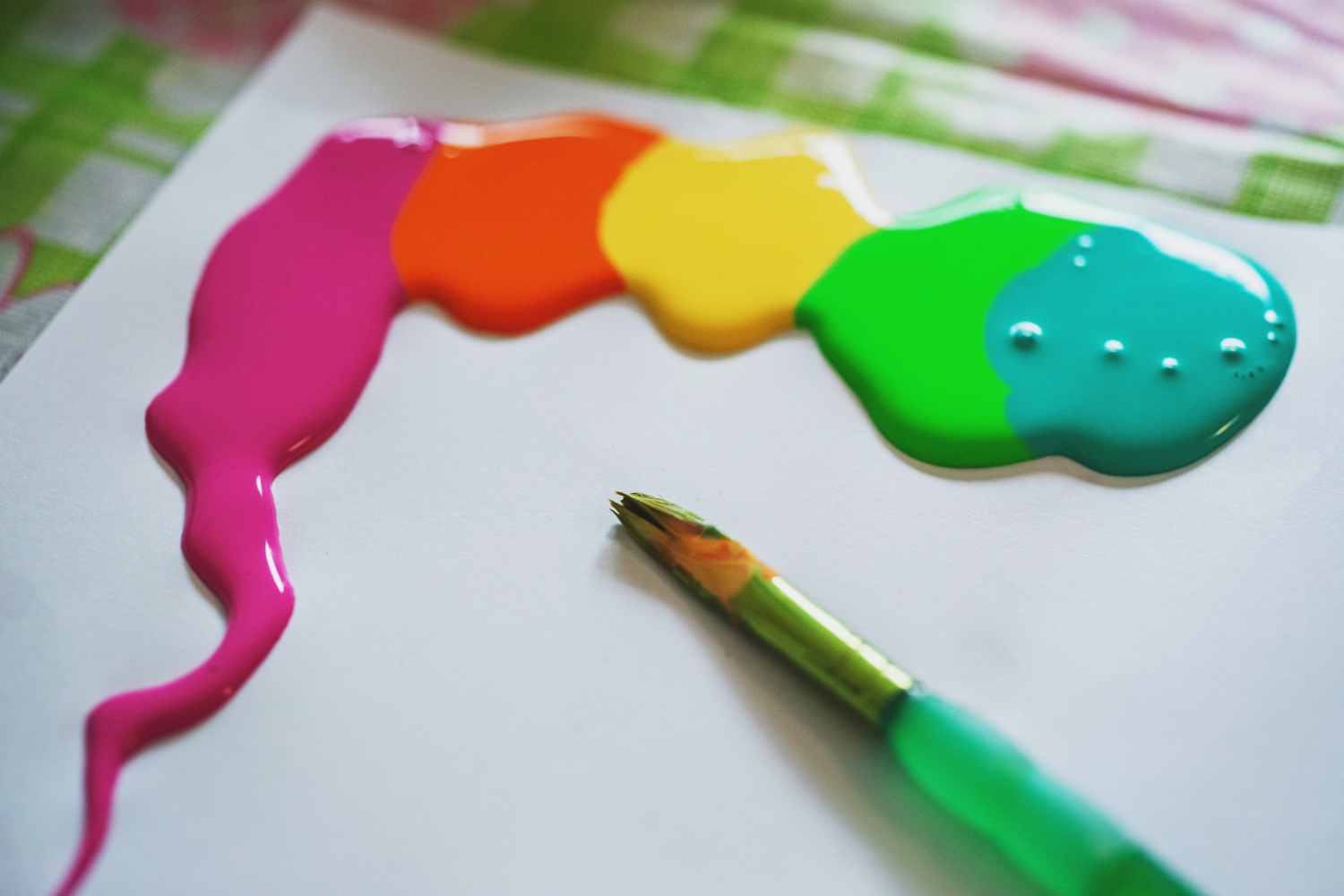
Acrylic paint is a water soluble type of paint that is made from acrylic polymers, pigment, and water. It's a popular choice because you can water it down, it has a fast drying time, and you can add lots of additives to the paint (gloss, metallics, pastes) to change the way it looks and feels on different surfaces.
Acrylic paint is not water resistant in the same way as oil-based paint. It actually mixes well with water and this is done to thin the paint out. This also eliminates the need to add harsh chemicals.

Is there a difference in the quality of acrylic paint?
The short answer - yes, there is a huge difference in the quality of acrylic paint. Sometimes you can't tell from an open bottle, but once the paint is dry, the difference is significant.
Why? It's because of what's been added to the paint and how pure the pigment is. The highest quality acrylic paint will have the purest pigment.
I have also noticed that some acrylic paints have more elasticity and shine than others. This is due to the ratio of additives inside the paint.
Can acrylic paint be washed off?
When it comes to acrylic painting, you are sure to make a mess at some point. Art supplies are messy! So does acrylic paint come out? If you wash it immediately, it should come out of clothing like cotton or denim. However, acrylic paint is a permanent paint, so definitely dress for a mess when you use it. In my experience, acrylic paint does stain most surfaces.
Unfortunately, acrylic paint can’t be easily washed off of a canvas, however, you can paint over it! Don’t be afraid to layer & explore mixing colors.

Color, hue, tint, shade, pigment: what does this all mean?
First, let me explain the main difference between a color and a hue.
Color is the umbrella term. It describes every tint, hue, shade, and tone that you see.
Hue refers to the original or main color. For example, red, yellow and blue are all hues. If you opened a tube of paint and it said cadmium red, the hue would be red. Primary, secondary and tertiary colors are all known as hues.
Tint is what you get if you add white to any color. Pastels are the most common tints, but even a subtle amount of white counts. Always start with the white and gradually add the hue when mixing colors.
Shade is the opposite of a tint: instead of adding white, you add black. When mixing shades, start with the color first, then add the black. It's nearly impossible to see any color in a shade if you start with black.
Pigment is the natural color used to make paint. Pure pigments typically come as a powder, then get mixed with an acrylic polymer and water to become paint.
Now that we've got those terms out of the way, let's talk about what it actually means for you when you hit the paint aisle.
How Are Paints Categorized?
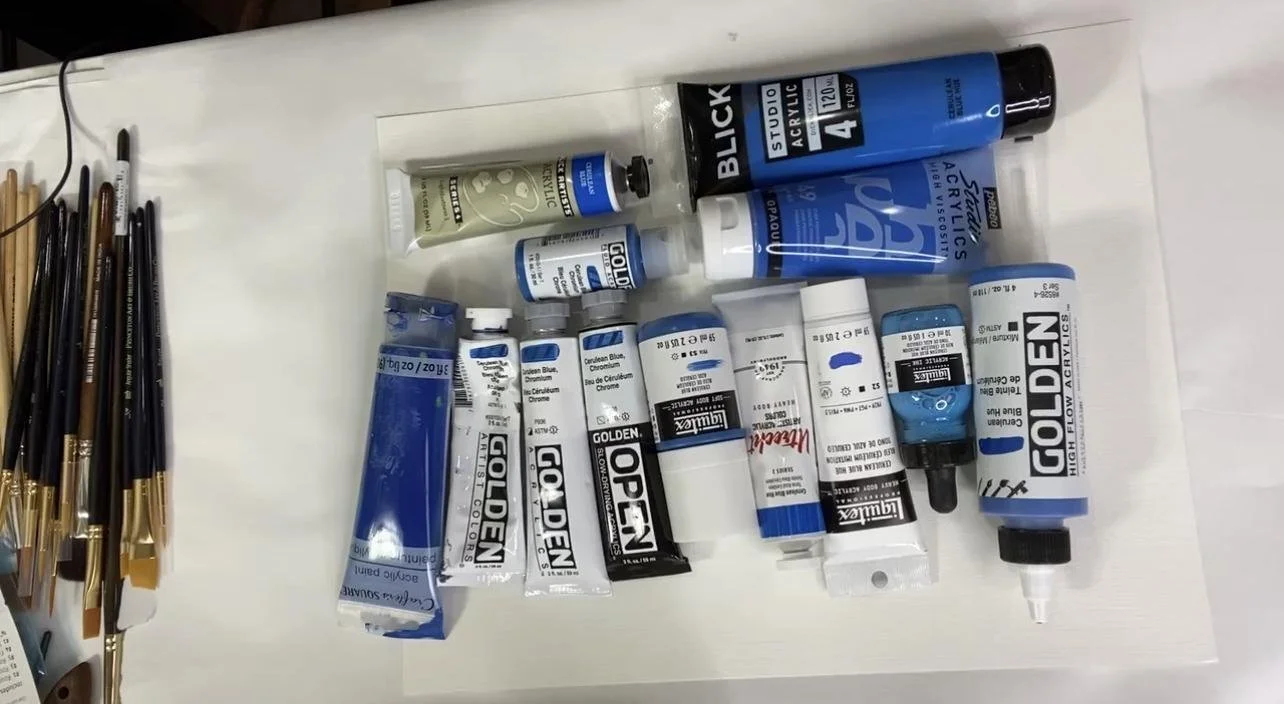
When you're purchasing paint, you can look at the tube or bottle to see which pigments are inside. I did a full study of Cerulean blue and bought it in several brands to see what the differences were.
The bottles labeled PB36 are a pure blue, meaning there's only one pigment in the bottle. Some bottles said "Cerulean Blue" on the label but actually contained other pigments, and sometimes white.
Professional-grade paints are typically the ones with the purest pigments, because professional artists prefer to mix their own colors using the highest-quality pigments rather than buying pre-blended colors. If you're curious about how paints are made, Golden's technical specifications page breaks down the chemical composition, permanency, and gloss level of each of their pigments in more depth than I can here.


Are expensive paints better?
Great question. I always wondered if those insanely expensive paints yield better results, or if student-grade and professional-grade acrylics were interchangeable. I tried a whole bunch of brands to find out…
Student Grade vs. Artist Grade Acrylic Paint
Each art supply store uses a slightly different categorization system, but there are typically three grades: student grade, artist grade, and professional grade. Student grade is self-explanatory. Artist grade is for someone who loves to paint but isn't quite ready to sell their work. Professional grade is for artists who are selling their work.
Artist grade paint
These are considered professional-quality paints. They have fewer additives, no extenders, a smooth consistency, a predictable drying process, and a high ratio of pigment. Artist-grade paints are rated by series number and work well across a variety of surfaces and mediums.
Series numbers: a series 4 paint is more expensive than a series 2 paint, but the quality is the same. So why is Cerulean blue more expensive than another hue at the same volume, from the same brand? It's because the Cerulean blue pigment itself is more expensive and harder to manufacture. That doesn't mean it's better quality; it just means not all colors cost the same to make. • (This isn't unique to paint, either: pigment cost varies the same way in glassblowing, which I minored in during college. Some colors of glass cost noticeably more than others for the same reason.)
Student grade paint
Student-grade acrylics cost less than artist grade because they use less pigment and more additives, called extenders, to stretch the color further. Think of it like the difference between wild-caught salmon and salmon with added color. Student-grade paints are usually made with hues (blended colors) rather than pure pigment, aiming to get close to the original color at a lower price.
This is why you can pick up a bottle of blue acrylic at the dollar store that just says "blue," not "Cerulean Blue." It's a hue with additives standing in for the real pigment. Does the quality difference actually matter in practice? I had the same question. Short answer: yes, and I'll get into exactly how in the testing section below.
The Different Types of Acrylic Paint
Heavy body acrylics
These have a high viscosity, meaning the paint is thicker and stickier. The color itself doesn't change (it's made with the same pigment as standard acrylic), but the glossiness can look different. Heavy-body acrylics are great if you want your brushstrokes to show and like texture in your work. They're also typically the more expensive, professional-grade option.
Soft body acrylics
These have a lower viscosity, so the paint goes on smooth. They carry the same amount of pigment as heavy body, just a different consistency, so the color should match. Soft paints don't hold texture as well, though you'll still see some slight brushstrokes when dry. They blend easily and work well for details like facial features.
Acrylic fluids, inks, and high-flow paints
Same pigment ratio, thinner consistency, so you'll use more product per project. These move across the canvas easily, mix well with heavy body and soft body acrylics, and can go through an airbrush or onto fabric. You can also use them like watercolor. They're a good choice for dripping and splatter techniques.
Acrylic paint pens
These are pens filled with acrylic paint. They dry out relatively quickly and come in a range of quality, but if you want pen-level control over your line work, they're the way to go. They do leak often, which can be frustrating, and they work best on glass, metal, and other non-porous surfaces.
How I Tested the Best Acrylic Paint Brands
I've been painting with my classes for a long time, but I typically buy whatever's least expensive: Folk Art, Craft Smart, Dollar Tree, and so on. Since I'm a self-proclaimed art supply junkie, I decided to do a deep dive to see if my instincts were right. Here's how I ran my (not so) scientific study.
I took a trip to Blick, Michaels, and Hobby Lobby and purchased several bottles of Cerulean Blue, sticking to bottles that actually said "Cerulean" on the label. The only exceptions were Craft Smart and Dollar Tree, since they use their own names for blue.
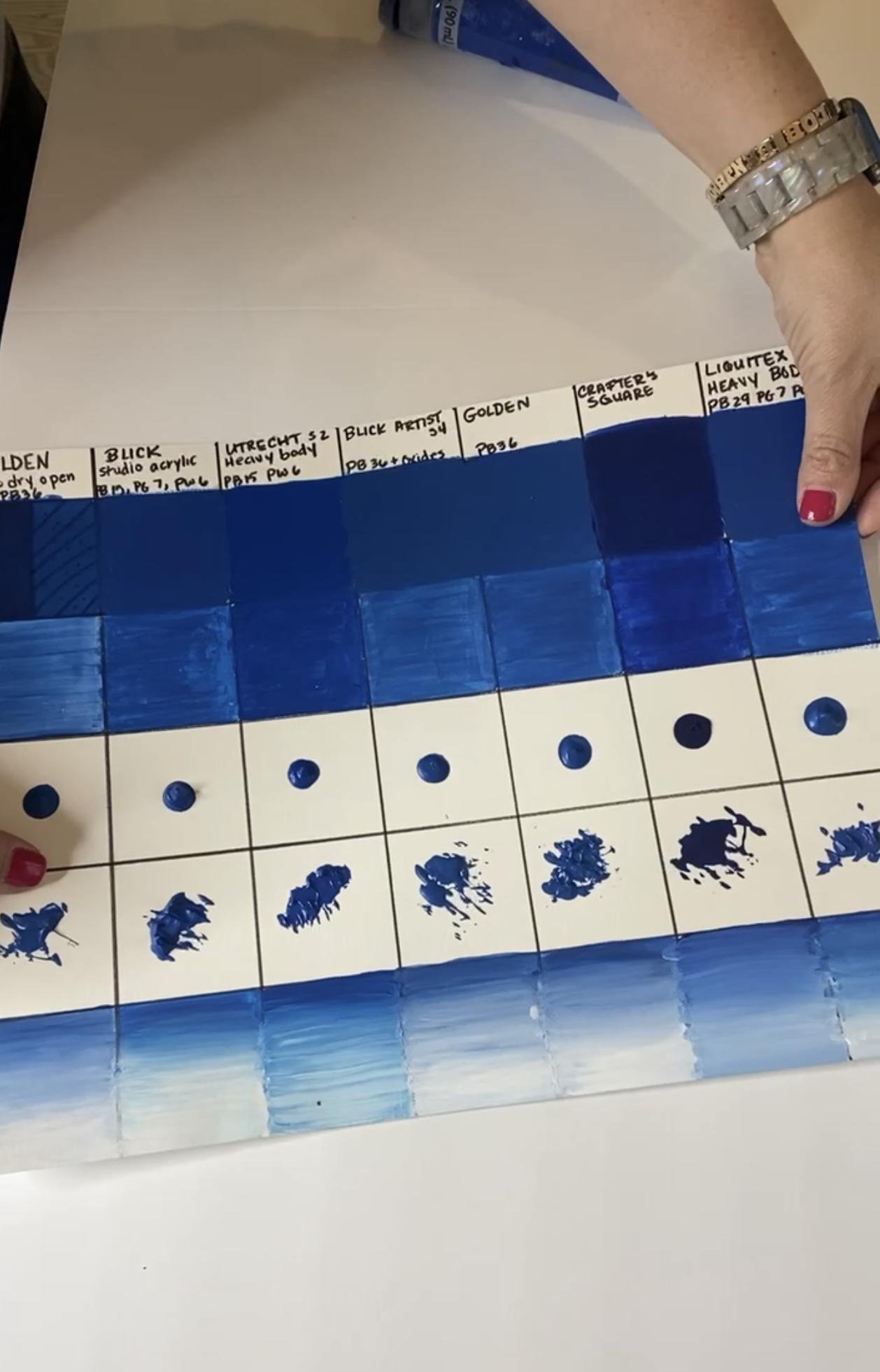
I made a chart with each paint's name down one side and a column per brand, then scored how well each one covered, how fast and smooth it dried, how it reacted when blended with white, and how well it held texture. In total I tested eight-plus brands, including Golden, Liquitex, Hobby Lobby's Master's Touch, Utrecht, Craft Smart, Dollar Tree, Amsterdam, and Winsor & Newton, across soft body, heavy body, and acrylic ink formulas.
My findings were interesting, and I recorded them both on paper and in a comparison chart.
What Acrylic Paint Should You Buy? (Side-by-Side Comparison)
Which acrylic paint should you buy? It depends on your goals! Here’s what came out on top for beginners, professionals, & everything in between!
THE ACRYLIC PAINT TEST
How the Brands Compared
I put each paint through the same hands-on tests for coverage, texture, blending, drying time and more. Here's how they stacked up.
| WHAT I TESTED | KIM'S PICK BEST OVERALL Golden | Blick Studio | KIM'S PICK BEST VALUE Utrecht Heavy Body | Blick Artist Grade | Golden Chromium | Crafter's Square | KIM'S PICK BEST OVERALL Liquitex Heavy Body | Craft Smart |
|---|---|---|---|---|---|---|---|---|
| Price | $14.99 | $6.39 | $7.20 | $9.35 | $14.99 | $1.25 | $6.25 | $0.79 |
| Bottle Size | 2 oz | 4 oz | 2 oz | 2 oz | 2 oz | 3 oz | 2 oz | 2 oz |
| Price Per Ounce | $7.50 | $1.59 | $4.68 | $4.68 | $7.50 | $0.42 | $3.13 | $0.40 |
| Coverage Coats over black |
3 | 4 | 2 | 5 | 3 | 4 | 3 | 4 |
| Blending With White | Excellent | Good | Excellent | Fair | Excellent | Excellent | Very Good | Good |
| Holds Shape | Medium | Excellent | Very Good | Poor | Very Good | Poor | Excellent | Poor |
| Gloss Level | High | Low | High | Medium | High | Low | Medium | Low |
| Cracking | No | No | No | No | No | Yes | No | Yes |
| Texture Test | Did not hold | — | — | Did not hold | — | Did not hold | Held texture | — |
| Drying Speed 1 = fastest | 7 | 1 | 5 | 4 | 3 | 2 | 6 | — |
| Test Notes |
|
|
|
|
|
|
|
— |
| Shape After Drying Overnight test | Fair | Excellent | Excellent | Poor | Very Good | Poor | Excellent | Very Poor |
← SWIPE TO COMPARE →



What acrylic paint should you buy?
It depends on what your goals are. Below are the best for beginners, professionals and everyone in between.
After testing and testing I definitely have an idea of the top acrylic paint brands. It is a good idea for you to do your own testing and research, but hopefully this will be used as a guide until you discover your top picks. In my experience, I sometimes discover new paints when testing.
Best acrylic paint overall (value and quality): Hobby Lobby’s ‘Master’s Touch’ and Liquitex
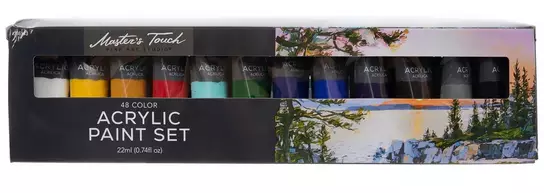
If you're just starting out and want high-quality paint without breaking the bank, my absolute favorite brand overall for both students and artists is Hobby Lobby's Master's Touch thick body acrylic. I also love Liquitex Basics and the Utrecht brand (owned by Blick).
Master's Touch isn't the most expensive paint, but it's a heavy body paint that's creamy and consistent with excellent coverage. It was a dream to paint with and mixed well with other brands.
Utrecht is a quality paint, and everything about it made me happy, including the way it dries. It only took two coats to cover black, which was noticeably fewer than every other brand I tested.
Best Acrylic Paint for Beginners or Students: Plaid or Apple Barrel

For elementary students, I highly recommend either the Apple Barrel or Plaid brands. Both are more than sufficient. If you're working in a school with a budget, Blick's student-grade acrylics are great. If you're teaching high schoolers, I'd recommend Utrecht or Hobby Lobby's Master's Touch; they have a great consistency and are very easy to work with.
Best Acrylic Paint for Kids:

If you're working with kids, start with a craft paint like Apple Barrel, Plaid, or Deco. I would not, however, recommend Dollar Tree paint for this age group. I found that it cracks and dries chalky, which might cause issues for kids with sensory sensitivities. These all have a higher viscosity than the professional paint types.
Best Professional Acrylic Paint for Artists:

I highly recommend Golden paint. Through my testing, they have the best quality and coverage. They are genuinely a joy to paint with! They have a huge product line and they make variety packs! A very close second would be Liquitex! They have wonderful variety packs as well!
Best Acrylic Paint for Pouring:

I like Golden fluid acrylics when I want more transparency. An insider trick: use house paint from the hardware store and add some Floetrol to the mix. It costs less and gives you the same movement you're looking for. Add silicone treadmill lubricant if you want to create cells in the paint. If you'd rather use something ready-made, I love the Liquitex fluid. They come in a great range of colors.
Best Value Acrylic Paint:

For the best value, I'd recommend the house brands at the art supply stores. Michaels, Blick, and Hobby Lobby all have their own professional-quality lines. I especially love Hobby Lobby's heavy body line. Blick's paint dries faster than the other brands, which is great if you want a fast-drying paint; if you want something slower, try Golden OPEN acrylics. The other reason I love the store brands: there's almost always a sale or coupon to offset the cost.
Best Acrylic Paint for Gelli Printing:
I like different paints for different purposes here. The fluid acrylics work great for some image transfers, but I generally prefer Amsterdam acrylics, Liquitex Basics, or Master's Touch heavy body acrylics for Gelli printing. I also tested Winsor & Newton and loved the way some of their colors performed on my gel plate. Some paints work better for printing colorful sheets and designs, and others work better for image transfer; if you want the full breakdown, check out my Gelli printing post for more detail.
The right choice really depends on your goals. Are you learning to paint, or refining a technique you already have? Are you painting on canvas, or working on a pour paint project? So many factors go into the right acrylic paint for your project, but you can't go wrong starting with Utrecht by Blick.

FAQs About the Best Acrylic Paint Brands
Is Folk Art or Apple Barrel paint good?
Yes! Folk Art is great for the average crafter, and I use it all the time in my crafting classes. It's not professional grade, but it works well and dries with a slightly chalkier, matte finish rather than a gloss. You can add a medium on top for extra shine.
How is the Dollar Tree brand paint?
It was genuinely a pleasure to paint with wet, but the drying result wasn't great. It went from a Cerulean shade of blue to a dark navy once dry, and it dried chalky with weak coverage. Mixing it with Utrecht white helped the quality some, but texture is the real issue: it flattens out completely and has no shine. It's not the best acrylic paint, but the price makes it a reasonable option if you're low on cash or just starting out.

Dollar Tree Paint Brand

Dollar Tree Paint Brand
What acrylic paint should I use with kids?
For a beginner painter, start with Craft Smart or Folk Art brands. I also really like Walmart's Apple Barrel and Hobby Lobby's Anita brands; any of these are a great choice for a kid's first acrylic paint. They dry a bit chalkier, but kids don't usually mind, and you can always add a layer of Mod Podge on top afterward.
What's the drying time of acrylic paint?
Acrylic paint's drying time depends on four main factors: temperature, humidity, paint thickness, and how porous your painting surface is. High humidity, cooler temperatures, and thick paint layers all slow drying down. For the fastest, most predictable results, work in a warm studio with low humidity, use thin layers of paint, and give your work enough time to dry all the way through before adding more layers or varnish.
What's the best acrylic paint for Gelli printing?
For Gelli printing, I reach for Golden Liquid Acylic, Liquitex Basics, or Master's Touch heavy body paint; they release cleanly from the plate and hold detail well. Winsor & Newton also performed well in my testing. The right pick still depends on whether you're printing flat sheets or doing an image transfer.
What acrylic paints do professionals use?
Professional artists most often reach for Golden or Liquitex, though some mix their own paint from raw pigments and additives, and others buy pre-made tube colors. The right answer also depends on technique: some artists prioritize higher permanence ratings, and others prefer acrylic gouache, which is a little more expensive. With so many options on the market, each artist tends to land on what fits their own goals.
Is Liquitex or Golden better?
It depends on your goals; they're both excellent paints. I personally love working with Golden for Gelli printing because it rolls on easily and prints beautifully. I prefer Liquitex for canvas painting because it holds its shape once dry. If texture isn't your priority, Golden also gives a smooth, high-gloss finish.
Happy Painting!
I hope this helped you find the best acrylic paint for your next project. Don't forget to check out my paintbrush care tips before you get started on your next pain project!
Kim Bloomberg has taught art for more than 20 years and is the founder and author of ArtBeatBox.com, where she tests, breaks down, and demystifies art projects and supplies for creatives at every level.